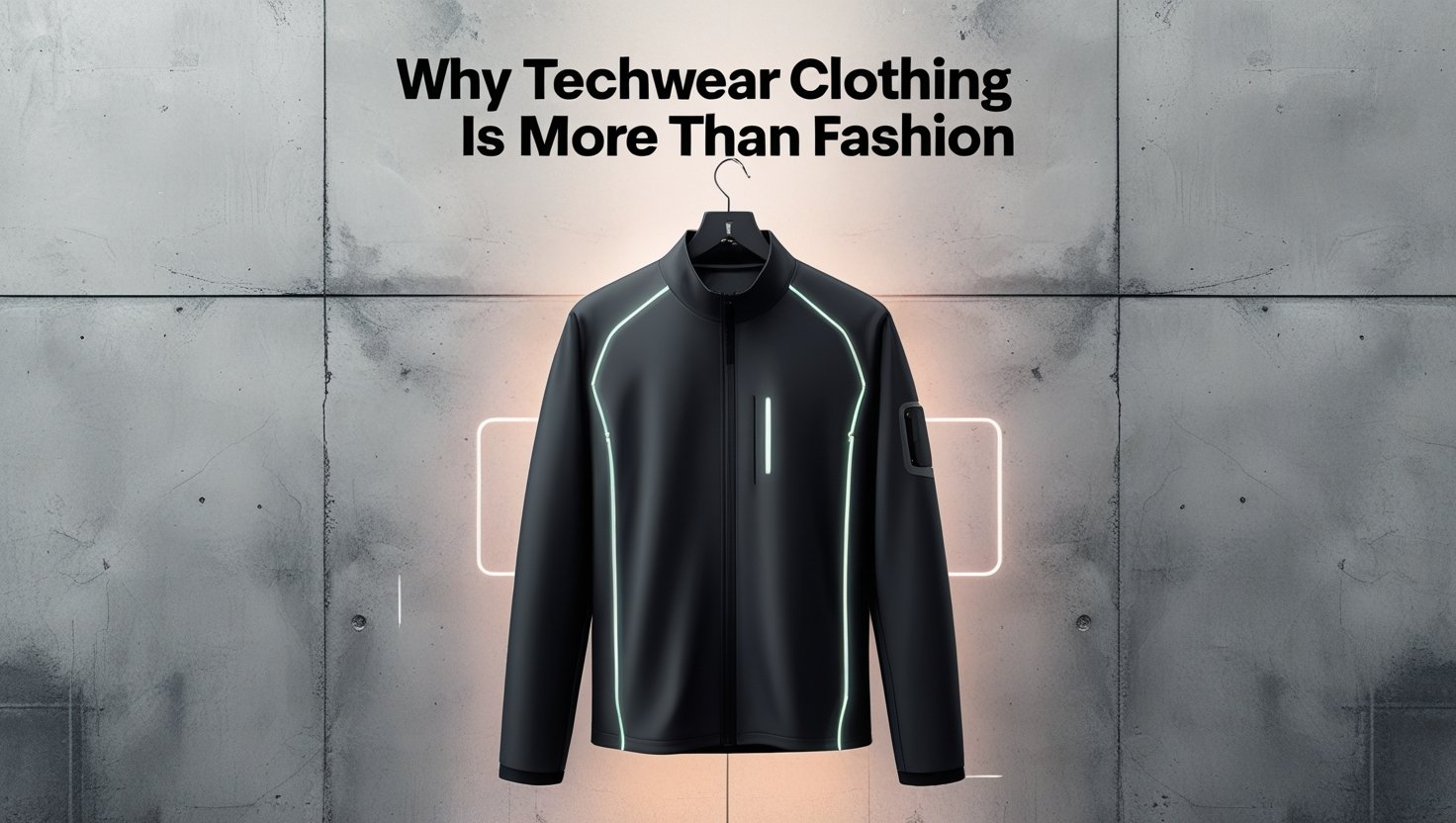
I used to think the height of fashion was finding a pair of jeans that didn’t need hemming. My closet was a graveyard of impulse buys, itchy sweaters, shoes that murdered my feet, and a jacket that turned into a sponge in the rain. I was playing dress-up, not getting dressed. Then, I bought a raincoat that changed everything. It wasn’t cute. It didn’t have a fancy label. But during a sudden downpour, as I watched everyone else sprint for cover, I stayed perfectly dry. I wasn’t just wearing a coat; I was wearing a solution. That’s when I realized: techwear isn’t a style. It’s a tool for living better.
Function is the New Form:
Forget runways. The real innovation is happening in labs where scientists are turning fabric into force fields. Techwear uses materials like Gore-Tex, a membrane with over 9 billion pores per square inch. Each pore is too small for a water droplet to enter, but large enough for water vapor (your sweat) to escape. This isn’t design; it’s biomimicry. Your jacket breathes like skin while shielding you from the elements. Every stitch has a job. Taped seams prevent water ingress. Zippers are weather-sealed. Pockets are placed for access, not just appearance. This is clothing engineered for reality, not just Instagram.
Your City is the Testing Ground:
Urban life is an obstacle course. You’re battling sudden storms, crowded subways, and long commutes. Techwear is your armor. It’s the difference between arriving at a meeting soaked and disheveled or dry and composed. Fabrics are chosen for durability, resisting scrapes against concrete or bike handles. Designs prioritize movement with articulated knees and gusseted crotches that allow you to run for a bus without splitting your seams. It’s clothing that acknowledges your life is dynamic, not static. It’s preparedness woven into every fiber.
The Quiet Sustainability of Less:
This movement is a silent protest against fast fashion’s waste. Techwear isn’t cheap, but it’s built to outlast trends. You buy one incredible shell jacket instead of five mediocre ones that will end up in a landfill. The philosophy is buy it once, buy it for life. This isn’t consumption; it’s curation. It forces a shift from wanting more to wanting better, a value that’s better for your wallet and the planet.
Wearing Your Values:
Ultimately, choosing techwear is a mindset. It’s prioritizing performance over pretense, substance over status. It’s the understanding that the right gear can make you more capable, more resilient, and freer. It’s not about looking like a character from a sci-fi movie. It’s about feeling like the best version of yourself, ready for whatever the day throws at you. Your clothes shouldn’t just be about what you’re saying to the world. They should be about what they’re doing for you.
FAQs:
1. Do I have to wear all black?
Not at all. While the monochromatic look is popular, performance fabrics come in many colors. Function first, aesthetics second.
2. Is this just for hiking or extreme sports?
No. The principles are perfect for anyone navigating a city. It’s for commuters, parents, and anyone who wants their clothing to be an asset, not a liability.
3. Why is it so expensive?
You’re paying for patented materials, rigorous testing, and construction built to last decades, not a single season. It’s an investment in utility.
4. Can you look professional in techwear?
Absolutely. Brands like Ministry of Supply and Outlier make tech-inflected dress shirts, trousers, and blazers that are both office-appropriate and performance-driven.
5. How do I start without a huge budget?
Start with one key piece. A weatherproof shell or a pair of durable, comfortable pants can redefine your relationship with getting dressed.
6. Is it machine washable?
Always check the label, but most high-tech fabrics are designed for easy care. Many just need a technical detergent to maintain their water repellency.